DOCTOR-AUTHOREDDentistry
A root canal (endodontic treatment)

Written by Dr. Aditya Ram Nalluri
Written by Dr. Aditya Ram Nalluri
Dentistry · Published 14 Jul 2026
Key takeaway
A root canal, also called endodontic treatment, is a dental procedure used to treat infection or inflammation inside a tooth. The inside of a tooth contains soft tissue called pulp...
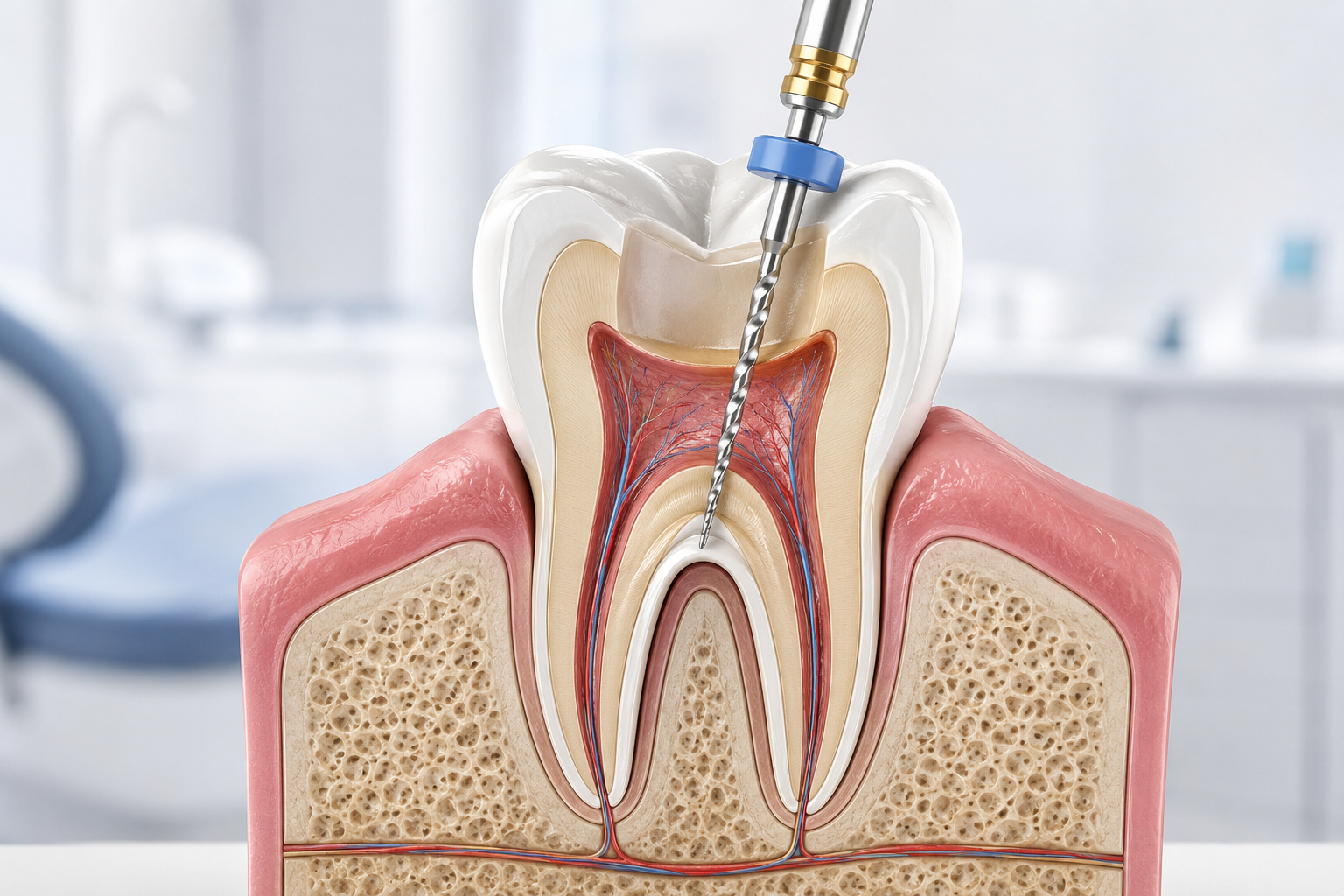
A root canal, also called endodontic treatment, is a dental procedure used to treat infection or inflammation inside a tooth. The inside of a tooth contains soft tissue called pulp, which includes nerves and blood vessels. When the pulp is damaged by deep decay, a crack, injury, or repeated dental work, it can become painful or infected.
During a root canal, a dentist or endodontist removes the damaged pulp, cleans and shapes the inside of the tooth, and seals the space. In many cases, the tooth is later protected with a crown or other restoration to help it function normally. The goal is to save the natural tooth when possible and prevent the problem from spreading.
Root canal treatment is commonly performed with local anesthesia to numb the area. Many people find it feels similar to getting a filling, though soreness afterward can happen for a short time.
If you have tooth pain, swelling, sensitivity, or a damaged tooth, see a qualified dentist. They can examine you, take X-rays if needed, and discuss whether a root canal or another treatment option is appropriate.
Symptoms that may lead a dentist to consider a root canal can vary. Some people have strong tooth pain, especially when chewing or putting pressure on the tooth. Others notice lingering sensitivity to hot or cold foods and drinks, even after the temperature trigger is gone. Pain may be constant or may come and go.
Other possible signs include swelling or tenderness in the gums near the tooth, a small pimple-like bump on the gum, darkening of the tooth, or a bad taste or odor if drainage is present. A tooth may also feel “different” from nearby teeth when biting.
It is also possible to need endodontic treatment without obvious symptoms. For example, an infection or pulp damage may be found during a dental exam or on an X-ray.
These symptoms do not always mean a root canal is needed. Tooth pain can come from cavities, gum disease, cracks, sinus problems, or other causes. If you have tooth pain, swelling, fever, facial swelling, or trouble swallowing or breathing, seek prompt dental or medical care. A dentist can evaluate the cause and discuss appropriate treatment options.
See a dentist promptly if you have tooth pain that is severe, lasts more than a day or two, or comes back repeatedly. You should also make an appointment if you notice lingering sensitivity to hot or cold, pain when chewing, swelling or tenderness in the gums, a pimple-like bump on the gum, a cracked or injured tooth, or darkening of a tooth.
Seek urgent dental or medical care if you have facial swelling, fever, swelling that is spreading, trouble opening your mouth, difficulty swallowing, or any trouble breathing. These can be signs of a problem that needs quick attention.
A dentist can examine your mouth, check how the tooth responds to temperature or pressure, and take X-rays if needed. Depending on the cause, treatment options may include a filling, crown, root canal treatment, tooth removal, or other care. If the problem involves the tooth pulp or root, your dentist may refer you to an endodontist, a dentist with special training in root canal treatment. Early evaluation can help relieve pain and reduce the chance of the problem getting worse.
Root canal treatment is usually needed when the pulp inside a tooth becomes inflamed, infected, or damaged. One common cause is deep tooth decay. If a cavity grows large enough, bacteria can reach the pulp and cause irritation or infection.
Cracks, chips, or fractures in a tooth can also allow bacteria to enter the inner part of the tooth. Sometimes the crack is small and hard to see, but it can still affect the pulp. An injury to the mouth, such as a blow to a tooth, may damage the pulp even if the tooth does not look broken.
Repeated dental procedures on the same tooth can sometimes irritate the pulp over time. Large fillings or extensive restorations may also increase stress on the tooth.
Gum disease and severe wear from grinding or clenching may contribute to problems around the tooth and its root, though not every case leads to root canal treatment.
Because tooth pain and sensitivity can have many causes, a dentist needs to examine the tooth and may take X-rays or perform other tests to determine what is happening and what treatment options are appropriate.
Several factors can raise the chance of pulp inflammation or infection that may lead to root canal treatment. Deep cavities are a common risk factor, especially when dental decay is not treated early. Cracked, chipped, or heavily worn teeth can also allow bacteria or irritation to reach the inside of the tooth.
A past injury to a tooth, such as from a fall, sports accident, or blow to the mouth, may damage the pulp even if the tooth looks normal at first. Teeth that have had repeated dental work, large fillings, or extensive restorations may be more likely to develop pulp problems over time.
Grinding or clenching the teeth can put extra stress on teeth and may contribute to cracks or wear. Gum disease, poor oral hygiene, frequent sugary foods or drinks, and dry mouth can increase the risk of tooth decay and other dental problems.
These risk factors do not mean you will need a root canal. Regular dental checkups, early treatment of cavities, use of a mouthguard when recommended, and good daily brushing and flossing can help protect your teeth. Ask a dentist about your individual risks and prevention options.
Root canal treatment is generally safe, but complications can occur. Some soreness, mild swelling, or tenderness when biting is common for a few days after treatment. This usually improves, but pain that worsens or does not settle should be checked by a dentist.
Infection can sometimes persist or return if bacteria remain in the canals, if a canal is very narrow or hard to find, or if the tooth is not sealed or restored properly. A treated tooth can also crack or break, especially if it has lost a lot of structure. This is one reason a crown or other restoration may be recommended after treatment.
Less common problems include a dental instrument breaking inside a canal, irritation of tissues around the root, or filling material extending beyond the root tip. In some cases, a root canal may not fully resolve the problem, and retreatment, root-end surgery, or tooth removal may be discussed.
Contact a dentist promptly if you develop increasing pain, swelling, fever, a bad taste or drainage, or trouble biting after treatment. Regular follow-up and timely placement of the final restoration can help reduce the risk of complications.
Diagnosis starts with a dental history and exam. A dentist will ask about the type of pain, when it started, what triggers it, and whether it lingers after hot, cold, or pressure. They will look for decay, cracks, swelling, gum changes, drainage, or changes in tooth color.
Several simple tests may help identify whether the pulp is inflamed, infected, or no longer alive. These can include gently tapping on the tooth, checking how it feels when biting, and testing its response to cold, heat, or a mild electric stimulus. The dentist may also examine the gums and measure around the tooth to look for signs of gum disease or a fracture.
Dental X-rays are often used to look for deep decay, bone changes near the root, old restorations, or other problems that are not visible during the exam. In more complex cases, a 3D scan may be recommended.
A root canal is not diagnosed from pain alone. Similar symptoms can come from cavities, gum disease, sinus pressure, jaw problems, or cracked teeth. After evaluation, the dentist can explain whether endodontic treatment, a filling, crown, extraction, or referral to an endodontist is appropriate.
Lab tests are not usually needed to decide whether a tooth needs a root canal. The main “tests” are done in the dental office. Your dentist may use dental X-rays to look for deep decay, infection near the root, bone changes, or the shape of the root canals. In some cases, a 3D dental scan may help show complex roots, cracks, or infection that is hard to see on regular X-rays.
Office procedures may include pulp testing with cold, heat, or a mild electric stimulus to see how the tooth nerve responds. The dentist may also tap the tooth, check your bite, and examine the gums around it.
If root canal treatment is recommended, the tooth is usually numbed with local anesthesia. The dentist or endodontist makes a small opening in the tooth, removes the damaged pulp, cleans and shapes the canals, and seals them with a filling material. A temporary filling may be placed until the final restoration is ready. Many back teeth and weakened teeth need a crown afterward to help protect them. Your dentist can explain which tests and procedures are appropriate for your situation.
Treatment depends on the cause of the tooth problem, how much tooth structure remains, and whether the tooth can be restored. If the pulp is infected or badly inflamed, a dentist or endodontist may recommend root canal treatment to try to save the natural tooth.
During the procedure, the tooth is numbed with local anesthesia. The dentist makes a small opening, removes the damaged pulp, cleans and shapes the root canals, and seals the space with a dental filling material. A temporary filling may be used until the tooth is ready for a permanent restoration. In many cases, especially for back teeth, a crown is placed later to protect the tooth and help it withstand chewing.
If infection is present, your dentist will decide whether any additional treatment is needed. Antibiotics are not a substitute for removing the source of infection, but they may be used in certain situations.
If a tooth cannot be saved, removal may be discussed. Replacement options, such as an implant, bridge, or partial denture, may be considered. Your dentist can explain the benefits, risks, costs, and timing of each option.
Nutrition cannot cure an infected or inflamed tooth, but good food choices can support comfort, healing, and overall oral health during and after dental care. After a root canal, your dentist may suggest soft foods for a short time, especially while the tooth is tender or has a temporary filling. Examples include yogurt, eggs, soups that are not too hot, smoothies, oatmeal, mashed vegetables, pasta, and soft fish or chicken.
Avoid chewing on the treated tooth until your dentist says it is safe, particularly if a permanent crown or filling has not yet been placed. Hard, crunchy, or sticky foods can increase the risk of discomfort or damage to a weakened tooth. If your mouth is still numb, wait to eat until feeling returns so you do not accidentally bite your cheek or burn your mouth.
For prevention, limit frequent sugary snacks and drinks, since they increase the risk of cavities. Drink water, eat a balanced diet with fruits, vegetables, whole grains, and protein, and keep up with brushing, flossing, and dental visits. Ask your dentist for guidance if you have diabetes, dry mouth, or dietary restrictions.
Surgery is not needed for most root canal treatments. When it is needed, the most common endodontic surgery is called root-end surgery, or an apicoectomy. This may be considered if infection or inflammation remains near the root tip after a root canal, or if retreatment through the crown of the tooth is not practical.
During root-end surgery, an endodontist or oral surgeon numbs the area, makes a small opening in the gum, removes infected tissue and the very tip of the root, and seals the end of the canal. Stitches may be placed while the gum heals. Mild soreness or swelling can happen afterward, and your dental team will explain how to care for the area.
If a tooth is badly cracked, has too little healthy structure left, or cannot be restored, removal of the tooth may be discussed instead. Replacement options may include an implant, bridge, or partial denture.
The right choice depends on the tooth, X-ray findings, symptoms, and your overall health. Ask a qualified dentist, endodontist, or oral surgeon about the benefits, risks, alternatives, and expected recovery before any surgical procedure.