Key takeaway
Occasional acidity and indigestion are common, but recurring symptoms or warning signs need medical assessment. Learn typical triggers, practical meal and sleep habits, and when ur...
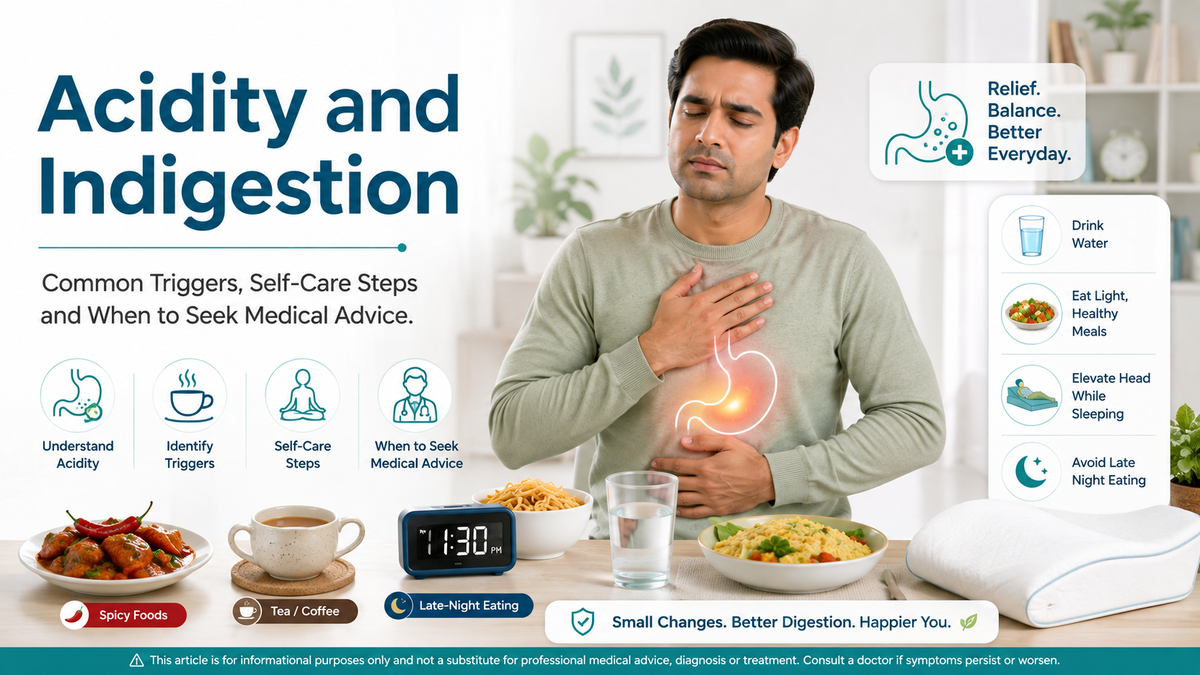
“Acidity” is a commonly used term for burning or discomfort linked to acid reflux, heartburn or indigestion. Acid reflux means stomach contents move backwards into the oesophagus, the food pipe connecting the mouth to the stomach. Heartburn is the burning sensation this may cause behind the breastbone. Indigestion, also called dyspepsia, usually describes discomfort, burning, early fullness or heaviness in the upper abdomen. These problems can occur together, but they are not exactly the same.
An occasional episode after a heavy, spicy or late meal is common and often improves with simple changes. Symptoms deserve more attention when they happen frequently, disturb sleep, are becoming stronger, or interfere with eating and daily life. Similar discomfort can sometimes come from an ulcer, inflammation, gallbladder disease, a medicine effect or, less commonly, another serious condition. Chest discomfort can also be related to the heart rather than digestion.
This article explains common symptoms, triggers, warning signs and safe self-care steps for adults. It is not a diagnosis. The aim is to help you recognise a mild, occasional pattern while avoiding delay when symptoms are unusual or persistent. Children, pregnant people, older adults, and anyone with significant long-term illness may need individual advice from a qualified healthcare professional.
Indigestion commonly causes pain, burning or discomfort in the upper abdomen. Some people feel full soon after starting a meal or remain uncomfortably full after eating only a small amount. Bloating, nausea and repeated belching may also occur. Heartburn is usually felt as a burning sensation behind the breastbone that may rise towards the throat. A sour, bitter or acidic taste in the mouth can occur when stomach contents travel upwards.
Symptoms may become more noticeable after meals, especially large or fatty meals, or when bending, exercising soon after eating, or lying flat. Night-time symptoms may cause coughing, throat irritation, hoarseness or disturbed sleep. Some people describe upper abdominal heaviness rather than pain. Others notice that symptoms vary from day to day depending on meal timing, stress, sleep and particular foods. Reflux can occur without obvious burning, so recurring sour taste, throat symptoms or regurgitation—the effortless return of stomach contents—also deserves attention.
Pay attention to the pattern. Useful details include when symptoms begin, whether they follow certain foods, whether they improve after sitting upright, how often they occur, and whether there is vomiting, swallowing difficulty or weight loss. Keeping a brief record for one or two weeks can help identify personal triggers and give a clinician clearer information.
Not every pain in the chest or upper abdomen is “gas” or acidity. Burning from reflux may resemble chest discomfort from heart disease, and symptoms can overlap. New, severe or unexplained chest pain should not be self-diagnosed, particularly when accompanied by breathlessness, sweating, dizziness, weakness or pain spreading to the arm, shoulder, back, neck or jaw.
Acid reflux occurs when the muscular valve between the oesophagus and stomach does not prevent stomach contents from moving upwards effectively. Indigestion may arise from how the stomach handles food, increased sensitivity in the upper digestive tract, irritation of the stomach lining, or an underlying digestive condition. Sometimes no clear structural cause is found.
Common contributors include eating large portions, eating quickly, lying down soon after meals, and having heavy food late at night. Fatty or fried foods, very spicy meals, chocolate, coffee, tea, carbonated drinks, tomatoes, citrus foods and alcohol can trigger symptoms in some people. A food that affects one person may not affect another, so unnecessarily restrictive diets are usually not helpful.
Other risk factors include excess body weight, smoking or tobacco use, pregnancy, stress, anxiety, irregular meal timing, and a hiatus hernia. A hiatus hernia means part of the stomach moves upwards through the diaphragm, the muscle separating the chest and abdomen. Certain medicines can irritate the stomach or worsen reflux, including some anti-inflammatory painkillers. Do not stop a prescribed medicine on your own; ask the prescribing doctor or a pharmacist whether it could be contributing.
Recurring indigestion may also be associated with gastritis, which is inflammation or irritation of the stomach lining; peptic ulcer disease, an open sore in the stomach or first part of the small intestine; or infection with Helicobacter pylori, often shortened to H. pylori. Constipation, gallbladder problems and other abdominal conditions can also produce discomfort that people may label as “gas.” A clinician may consider these possibilities when symptoms persist, return frequently or occur with warning signs.
Seek urgent medical assessment rather than treating the problem as routine acidity if you have any of the following:
Bleeding in the digestive tract may appear as red blood, coffee-ground-like vomit, or black and sticky stools. It can also cause dizziness, faintness, breathlessness or unusual tiredness. These features require prompt care.
Treat chest pain as an emergency when it is severe, crushing, tight or unfamiliar, or when it occurs with shortness of breath, sweating, nausea, dizziness, faintness, or pain spreading to the arm, shoulder, back, neck or jaw. Heart-attack symptoms can sometimes feel like indigestion or heartburn. Do not wait for the discomfort to become unbearable and do not drive yourself if emergency help is available.
Warning signs do not prove that a serious disease is present, but they mean that timely examination is safer than continued self-care. Extra caution is sensible when symptoms are completely new, clearly different from past episodes, or occur in a person with known heart disease, a previous ulcer, digestive bleeding, or major unexplained illness.
For mild, occasional symptoms without warning signs, begin with practical changes and observe what helps:
Drink enough water, but avoid forcing large quantities during meals if that increases fullness. Choose simple, familiar meals during a flare rather than fasting for long periods. Resume variety as symptoms settle, because a permanently bland or highly restricted diet is rarely necessary without professional advice. Do not use baking soda, herbal mixtures or repeated over-the-counter remedies as a long-term substitute for assessment. Products may interact with other medicines or be unsuitable during pregnancy, kidney disease, liver disease or other conditions. A pharmacist or doctor can guide safe short-term options without you changing prescribed treatment independently.
Arrange a medical consultation if acidity or indigestion keeps returning, occurs on most days, wakes you repeatedly at night, or has continued despite sensible meal and lifestyle changes. Assessment is also appropriate when symptoms are new and persistent, are becoming more frequent or painful, or require repeated use of non-prescription remedies. NHS guidance advises medical review for recurring indigestion and for symptoms accompanied by severe pain, weight loss, swallowing difficulty, repeated vomiting, anaemia or bleeding.
Seek earlier advice if you are pregnant, older, have heart disease, diabetes, kidney or liver disease, take blood thinners or regular anti-inflammatory painkillers, or have a previous ulcer or digestive-tract bleeding. A clinician may review your medicines, examine you, and decide whether testing for H. pylori, anaemia, ulcer disease or another cause is needed.
Go to an emergency department or call your local emergency service immediately for warning signs such as vomiting blood, black tarry stools, fainting, severe or rapidly worsening abdominal pain, or new concerning chest pain with breathlessness, sweating or spreading pain.
For mild symptoms without red flags, a pharmacist can be a useful first contact and can check whether another medicine may be contributing. However, repeated symptoms should not be managed indefinitely without understanding the cause. Timely evaluation is especially important when the symptom pattern changes or your general health is affected.
Related articles

Missed Childhood Vaccines as an Adult: How to Review Your Records and Discuss Catch-Up Vaccination
04 Oct 2026

Premature Skin Ageing in Young Adults: Common Causes, Prevention and When to Seek Advice
07 Aug 2026

Acne: Understanding Common Types, Skin-Care Basics, and When to See a Dermatologist
06 Aug 2026