Key takeaway
Early fine lines, uneven tone and reduced firmness may be linked to ultraviolet exposure, smoking, irritation and natural variation. Learn practical prevention, realistic treatment...

Premature skin ageing means visible skin changes appearing earlier than a person expects for their age. These may include fine lines, uneven colour, dryness, rough texture or reduced firmness. Ageing itself is normal and begins gradually in adulthood, but sunlight, smoking, pollution, repeated irritation and some lifestyle factors can speed up the process. Doctors often call ageing caused mainly by ultraviolet light “photoageing”.
The face, neck, upper chest, forearms and hands are commonly affected because they receive more sun. Indian skin tones may show early ageing as patchy pigmentation or dull, uneven tone before deep wrinkles become obvious. These changes are usually cosmetic, not dangerous, but a new or changing spot should not automatically be treated as ageing. A simple routine based on sun protection, gentle care and healthy habits can reduce further damage. A dermatologist can help when changes are sudden, unusual or distressing.
Early skin ageing matters because it can reflect repeated ultraviolet exposure and ongoing damage to the skin’s support structure. The same exposure that causes wrinkles and dark spots also raises the long-term risk of precancerous growths and skin cancer. Protecting the skin is therefore about health as well as appearance.
Concern about ageing can also affect confidence and lead people to try many products or unsafe home procedures. Strong acids, unregulated creams, steroid combinations and frequent scrubbing may cause burns, acne, thinning or lasting pigmentation. Realistic information helps young adults choose safer care, avoid unnecessary spending and recognise when a mark needs medical assessment rather than cosmetic treatment.
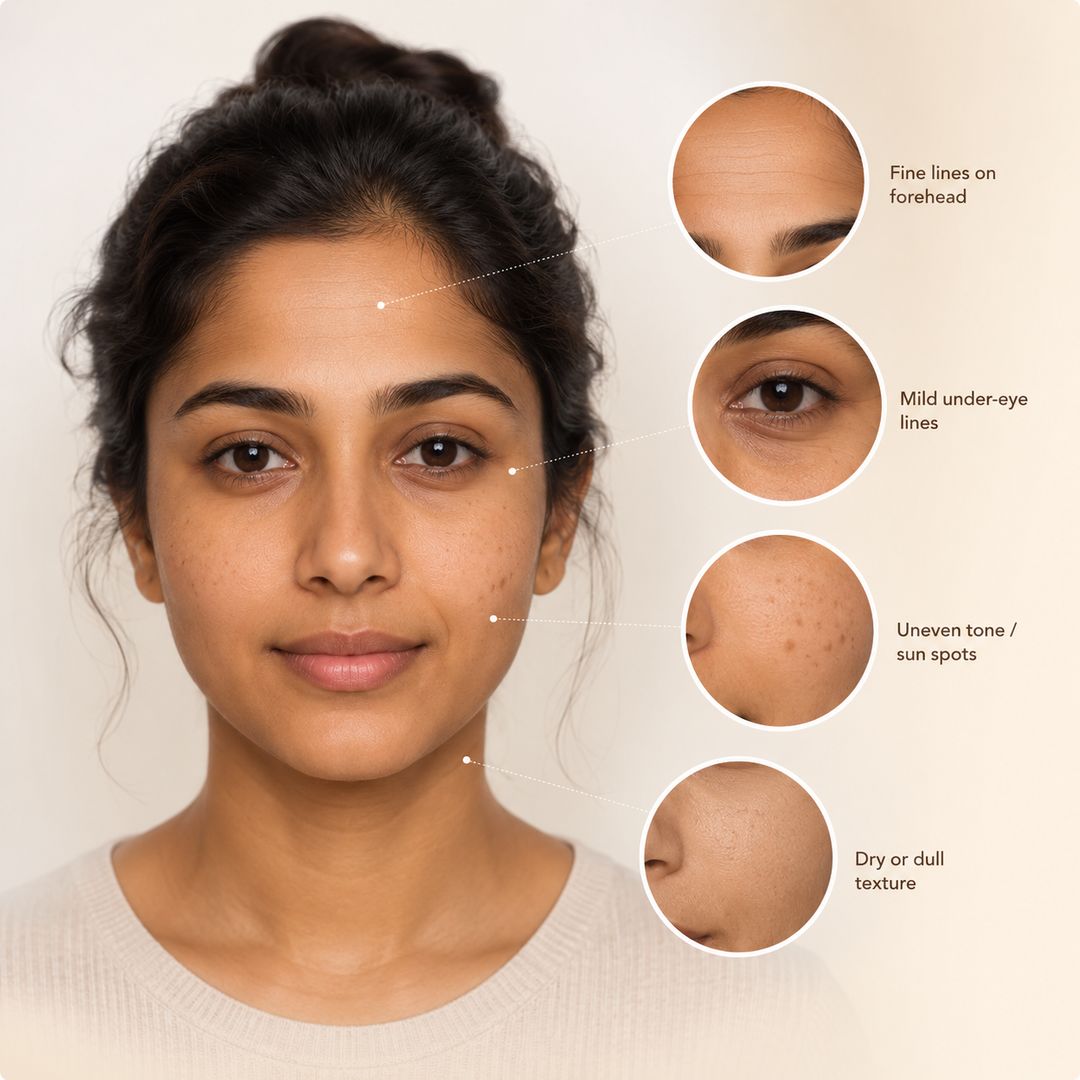
Premature ageing does not look the same in everyone. Fine lines may first appear around the eyes, forehead or mouth, especially where the skin moves repeatedly. Dryness can make these lines look deeper for a few hours or days. Uneven tone may appear as tanning, dark patches, sun spots or a generally dull look. In darker skin tones, colour change may be more noticeable than wrinkling.
Some people notice roughness, enlarged-looking pores or loss of brightness. Others feel that the cheeks or jawline are less firm, although facial shape, weight change and genetics also affect appearance. Sun-exposed areas such as the neck, upper chest and hands may age faster than covered skin. Acne marks, melasma, eczema, irritation and dehydration can mimic or exaggerate ageing, so persistent changes should be assessed in context rather than judged from one feature alone.
A dermatologist usually assesses premature skin ageing by examining the skin in good light and asking about the person’s concerns, sun exposure, work, smoking, skin-care products, medicines and family history. The doctor may compare sun-exposed and protected areas and look for fine lines, pigmentation, roughness, loss of elasticity or signs of inflammation.
Tests are not usually needed for ordinary photoageing. Dermoscopy, a magnified examination with a special light, may be used for a suspicious mole or spot. A small skin sample may be advised only when a lesion could be precancerous, cancerous or due to another condition. Blood tests are not routine, but sudden widespread dryness, hair changes, weight changes or other symptoms may lead the doctor to consider thyroid, nutritional or other health problems. Diagnosis should separate normal variation from treatable disease and from changes needing urgent review.
Treatment depends on the main concern, skin type, degree of sun damage and the person’s expectations. Daily sun protection is the foundation because procedures and creams cannot prevent new damage if ultraviolet exposure continues. Moisturisers can improve dryness and temporarily soften the look of fine lines.
A dermatologist may suggest topical retinoids or other evidence-based ingredients for fine lines, texture or uneven pigmentation. These can irritate the skin and are not suitable for everyone, including during pregnancy, so professional guidance is useful. Treatments for pigmentation may include carefully selected creams, chemical peels or light- and laser-based procedures. Fine lines or loss of volume may be treated with resurfacing procedures, botulinum toxin or fillers in suitable adults.
Results vary, and improvement is usually gradual rather than complete. Procedures can cause redness, swelling, burns, infection, scarring or darker or lighter patches, particularly when poorly chosen for the skin tone. Cosmetic treatment should be performed by a qualified dermatologist or appropriately trained medical professional. Avoid unlabelled bleaching creams, steroid mixtures, home lasers and strong do-it-yourself peels.
Keep the routine simple. Wash the face gently with lukewarm water and a mild cleanser, especially after sweating or heavy pollution exposure. Avoid harsh scrubs, rough brushes and frequent exfoliation. Apply a suitable moisturiser to slightly damp skin to reduce dryness and support the skin barrier.
Introduce only one new product at a time. Patch-test it on a small area and stop if there is persistent burning, swelling, blistering or a spreading rash. Products marketed as “anti-ageing” may improve hydration or texture, but no cream can permanently erase all wrinkles. More products do not mean better results; combining several acids, retinoids or scrubs can cause irritation and dark marks.
Do not smoke, and avoid second-hand smoke where possible. Eat a balanced diet with vegetables, fruit, pulses, whole grains and adequate protein. Stay physically active, sleep regularly and manage ongoing stress. Drink enough fluids for general health, while remembering that extra water alone does not reverse wrinkles. Photograph a concerning spot in consistent light if you need to monitor change, but do not depend on phone apps for diagnosis.

Protecting the skin from ultraviolet radiation is the most effective preventive step. Use a broad-spectrum, water-resistant sunscreen with SPF 30 or higher on exposed skin. Apply it before going outdoors and reapply during prolonged outdoor activity, especially after sweating, swimming or wiping the face. Sunscreen should support, not replace, other protection.
Seek shade when sunlight is strong. Wear a wide-brimmed hat, sunglasses and tightly woven or ultraviolet-protective clothing. Drivers and people sitting beside windows may still receive ultraviolet A exposure, so daily protection is useful. Avoid tanning beds and deliberate tanning.
Choose gentle skin care. Cleanse without over-washing, moisturise regularly and avoid repeated irritation from strong peels, bleaching agents or abrasive treatments. Treat acne, eczema and pigmentation early with appropriate advice so inflammation does not leave lasting marks. Smoking cessation can slow further damage and benefits the whole body.
Prevention cannot stop natural ageing or change genetics. The aim is healthier skin and slower avoidable damage, not permanently youthful skin. Consistency over months and years is more useful than short bursts of expensive treatment.
See a dermatologist if skin changes appear suddenly, progress quickly, cause pain or itching, or do not improve after simplifying the routine. Seek assessment for a new mole or spot that changes size, shape or colour; an irregular border; repeated bleeding or crusting; a sore that does not heal; or a persistent rough, scaly patch.
Medical advice is also helpful before using prescription retinoids, strong peels, lasers, injections or treatment during pregnancy. Get prompt care after a severe sunburn with extensive blistering, fever, vomiting, confusion or faintness. If appearance concerns are causing marked anxiety, avoidance or repeated unsafe treatments, discuss this openly with a healthcare professional. Cosmetic concerns are valid, but they should be managed safely and realistically.
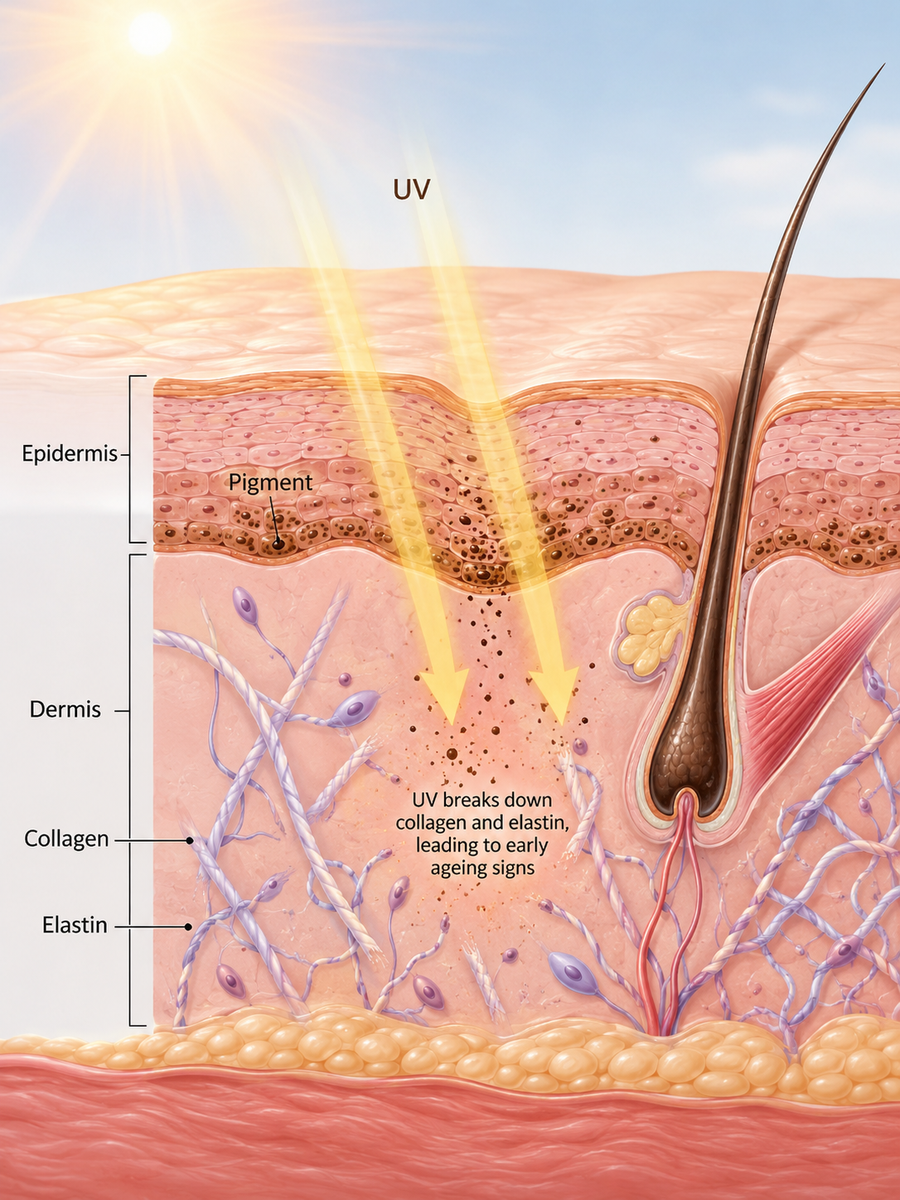
Skin has an outer epidermis and a deeper dermis. The dermis contains collagen, which gives strength, and elastin, which helps skin return to shape after stretching. Natural ageing slowly reduces cell renewal, oil production, collagen and elasticity. The skin becomes drier, thinner and less able to spring back.
Ultraviolet A rays can reach the dermis, while ultraviolet B rays mainly affect the outer layers and cause sunburn. Repeated exposure creates unstable molecules and signals that increase the breakdown of collagen and alter elastin. Pigment-producing cells may also respond unevenly, leading to tanning, dark patches or sun spots. Over time, the surface may look rougher and fine lines may remain even when the face is relaxed.
Sunscreen, shade and clothing reduce the amount of ultraviolet radiation reaching the skin. Moisturiser improves water retention in the outer layer, making dry lines less visible. Retinoids and some procedures can support collagen renewal or remove damaged surface layers, but they cannot return skin permanently to an earlier age or erase all accumulated damage.
Myth: Only fair skin ages from the sun. Fact: Every skin tone can develop photoageing and skin cancer. Darker skin has some natural protection, but it still needs sun safety.
Myth: Sunscreen is needed only on hot, sunny days. Fact: Ultraviolet radiation can reach the skin during cloudy weather and through some windows. Daily protection is useful when exposed.
Myth: A high SPF allows unlimited time in the sun. Fact: No sunscreen blocks all ultraviolet rays. Shade, clothing and reapplication still matter.
Myth: Natural or herbal products cannot harm the skin. Fact: Plant extracts, fragrances, lemon juice and essential oils can irritate, burn or darken skin.
Myth: Expensive creams can reverse ageing completely. Fact: Moisturisers and selected active ingredients may improve texture or fine lines, but results vary and natural ageing continues.
Myth: Facial exercises always tighten loose skin. Fact: Evidence is limited, and repeated movement can make expression lines more noticeable. Healthy habits and medically appropriate care are more reliable.
Related articles

Missed Childhood Vaccines as an Adult: How to Review Your Records and Discuss Catch-Up Vaccination
04 Oct 2026

Acne: Understanding Common Types, Skin-Care Basics, and When to See a Dermatologist
06 Aug 2026

Acidity and Indigestion: Common Triggers, Self-Care Steps and When to Seek Medical Advice
05 Aug 2026